
Readers researching Duarte citrus grove history need practical distinctions, reliable sources and a clear next step. The answer often depends on the circumstances, what can be verified and which professional or official instructions apply. This duarte history & archives guide focuses on the decision points people can actually investigate, rather than promising a universal result.
The most revealing local histories rarely come from one famous building or anniversary. They emerge when photographs, maps, family memories and records are studied together. This guide takes a source-conscious approach, distinguishing broader regional patterns from details that must be checked in individual Duarte collections.
How citrus shaped the Duarte landscape
Duarte citrus grove history is more than a story about rows of orange trees. The agricultural landscape depended on access to water, productive land, seasonal labor, roads, packing operations, and family networks. Some traces may remain in old photographs and property patterns, but the modern city looks very different. Local museums help connect those fragments without implying every remembered grove occupied a still-identifiable parcel. Local history becomes stronger when photographs, maps, oral testimony, property records, and newspapers are considered together. A remembered date might be approximate, and a family nickname might differ from the name in a public record. Preserving both versions, with clear attribution, is better than silently picking one. For further context, review Route 66 and Duarte history.
Rancho-era landholding, later agricultural development, and twentieth-century suburban growth were different chapters in the San Gabriel Valley. It would be inaccurate to treat them as one continuous orchard period. A careful timeline asks when a particular parcel was planted, who owned or worked it, how it received water, and when the land use changed. Historic maps and dated records matter. An old image is not self-explanatory. Ask who took it, where the camera was positioned, whether the location has changed, and whether writing on the back is contemporary with the photograph. These details can turn an attractive artifact into useful evidence about a community’s development.
Land, water and the agricultural economy
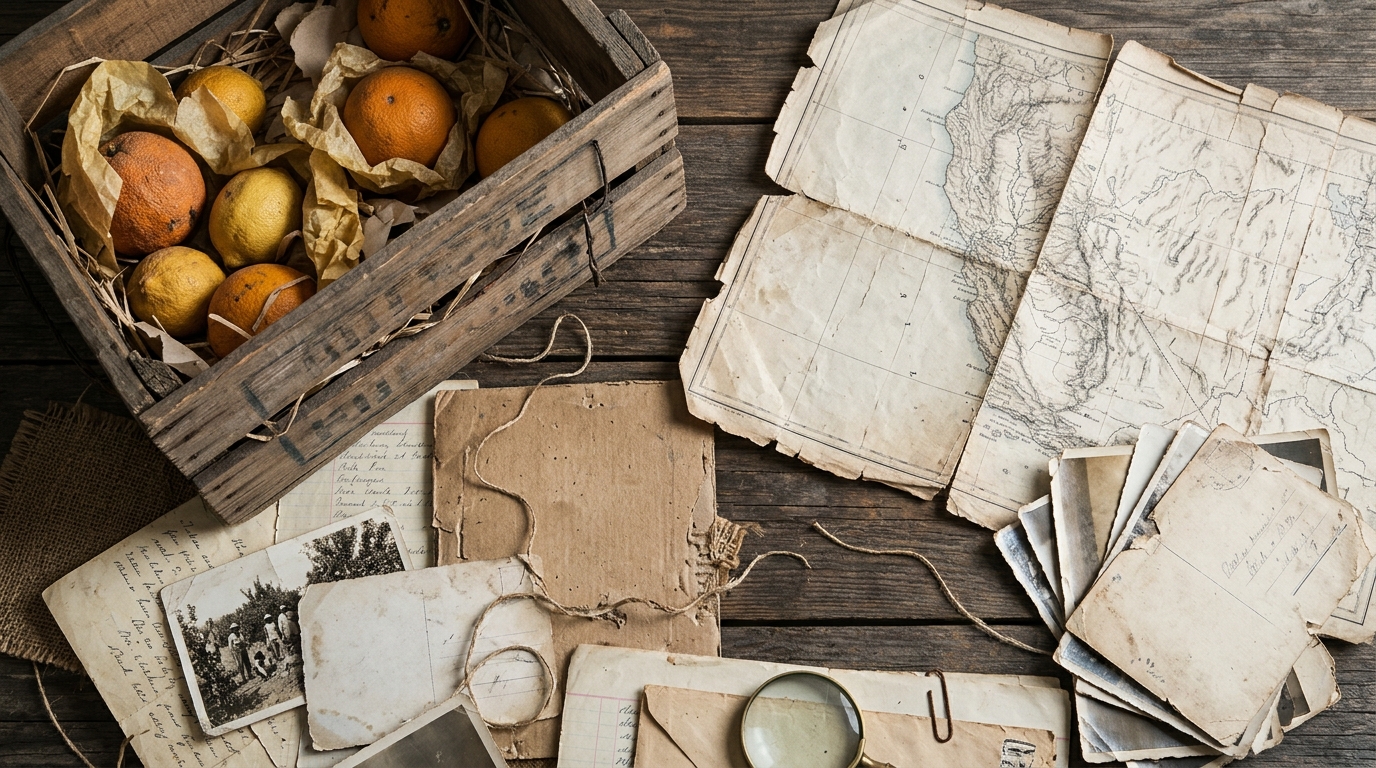
Citrus cultivation required decisions about irrigation, frost risk, labor and shipping. The availability of water shaped which land could support commercial orchards, while the broader Los Angeles region provided changing routes to customers. Rather than assuming one irrigation system served every property, researchers should compare the relevant water records, maps and contemporary descriptions for a specific grove. Place names change over time, and modern boundaries do not always match historic parcels. Avoid projecting today’s streets or jurisdictions backward without consulting historic maps. Property documents may describe a larger landscape than the neighborhood residents recognize today.
Orchard boundaries changed as the city grew
Aerial images, tax records and land-sale advertisements can show how orchard blocks became streets, schools and housing. But photographs from different decades should not be combined as though they depict one moment. Road alignments and neighborhood names may also have changed. Annotating dates and sources helps residents understand what is known and what still requires research. Agriculture was not only about crops; it depended on labor, water, transport, markets, and households. A complete account should include people whose work rarely appeared in promotional brochures. School archives, family albums, and oral histories can preserve perspectives missing from official business documents.
Packing and transport connected farms to markets
The workers and families of Duarte’s citrus years deserve attention alongside business owners. Harvesting, sorting, transport and domestic labor all influenced the community’s life. Older community histories may underrepresent some groups. Oral testimonies, school records and family collections can reveal daily experiences that official agricultural reports missed, provided memories are attributed and checked respectfully. The difference between a local memory and a verified claim is not whether the memory matters. Rather, it is whether its date, location, and interpretation have been checked. Annotating uncertainty invites future researchers to improve the record without erasing the original storyteller.
The citrus economy also shaped everyday routines beyond harvesting. Seasonal work, school attendance, family purchasing and trips between farms and nearby commercial centers can appear in diaries and community newspapers. A single crop ledger records production but may reveal little about the people who performed the labor.
The people behind the groves
The rise of automobiles and postwar regional development eventually altered the economics and land use of many San Gabriel Valley agricultural communities. That process was uneven. A surviving tree does not prove a parcel was part of a particular commercial grove, and a new subdivision does not reveal the complete story of a farm that preceded it. Local evidence is essential. When digitizing a photograph, record the best available provenance and scan both sides when permitted. Keep an unedited master copy and document later cropping or color correction. If the photo belongs to someone else, ask about permission before publishing it online.
Older packing labels and advertisements are appealing artifacts, yet they were created to sell products. Their artwork may romanticize agriculture or omit working conditions. Using them alongside family interviews and archival records gives a fuller account of the industry’s benefits and inequalities.
How residents can research and preserve citrus-era stories
Start a family-history search with names, approximate dates, street or parcel references, and any photographs containing identifiable background details. Ask the Duarte Historical Society & Museum about collections and research access. Compare information with county archives, historical newspapers and local city records. Write down the full citation for every finding so future researchers can retrace the work. A walking tour or classroom activity can compare historic maps with the modern street grid, but avoid implying every surviving building dates from the same period. Small landscape details—tree rows, lot widths, street alignments—may be just as revealing as celebrated landmarks.
What old photographs can and cannot prove
Families can improve preservation by scanning both sides of prints, recording the names of people shown, and keeping original materials in stable conditions. An interview with an older relative should include permission, a date, and questions about what the person witnessed directly versus learned from others. Those distinctions make the resulting story more useful without diminishing its human value. Community history should not depend on a single anniversary. Families can label photographs, interview elders with consent, and donate copies to appropriate collections. Museums can provide guidance on storage, cataloging, and when original materials need conservation care.
Compare family photographs with maps and directories
Imagine a photograph labeled only ‘Grandpa’s oranges, Duarte.’ The image may reveal the type of trees and nearby building forms, but it cannot establish a precise date or orchard owner by itself. An address book, family letter or dated newspaper advertisement could supply the missing context. Each added source makes a more defensible community history possible. A careful story leaves room for revision. Cite the institution holding a record, identify reconstructed scenes as illustrations, and invite corrections with supporting evidence. That approach makes history accessible without treating speculation as a settled fact.
Preserve oral history with context and consent
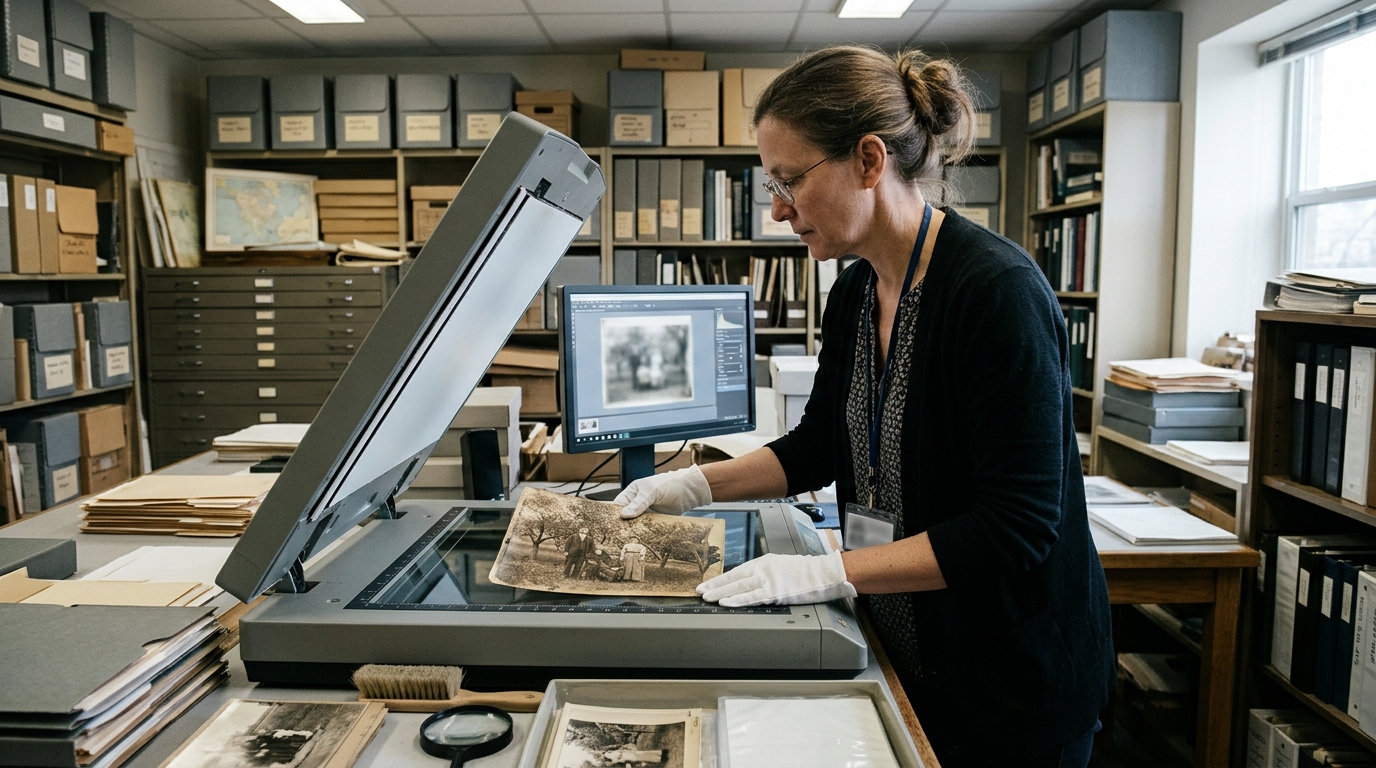
Educators can build a small source-comparison exercise: show students one orchard photograph, one property map and one later street view. Ask what each proves and what cannot be concluded. This turns local history into a method of inquiry rather than a list of names and dates to memorize.
A local archive can also preserve the small objects that connect individuals with the wider agricultural economy: a dated receipt, a worker’s lunch tin, a school photograph or a family address book. Such items are not valuable only because they are old. Their greatest contribution is the context that helps historians connect a particular person, activity and place.
Archive exercise: Choose one image and create a short record with its probable date, possible location, known people, source, copyright status and remaining questions. Compare it with a map or directory from the same period. This habit turns a private keepsake into a more useful piece of collective history.
For authoritative context, consult Duarte Historical Society & Museum. Its scope and limitations should be considered alongside the specific facts; the link is not a substitute for professional or local instructions.
Duarte’s historical landscape becomes clearer when residents share records with careful dates, locations and source notes. Treat reconstructed scenes as illustrations, preserve original materials respectfully and let new evidence refine the story. Local history is strongest when more people can check how its conclusions were reached.