The Route 66 Centennial in 2026 marks an important milestone for Duarte, California, and communities across the United States. Established in 1926, the legendary highway became one of America’s most recognizable transportation routes, connecting travelers with small towns, growing cities, and changing landscapes. In Duarte, its story is closely associated with Huntington Drive, local businesses, community traditions, and the development of the San Gabriel Valley.
For generations, Route 66 represented opportunity, mobility, and exploration. Families traveled along its pavement, businesses served passing motorists, and communities developed distinctive identities around the famous highway. Although modern freeways eventually replaced much of its original transportation function, the road’s historical importance remains visible.
Duarte’s connection to Route 66 is particularly meaningful during the centennial year. The city celebrated the anniversary with activities honoring local history, while the Duarte Historical Society and Museum organized opportunities for residents to explore the highway’s cultural legacy.
Understanding this history requires looking beyond classic cars and roadside signs. Route 66 influenced how people traveled, how businesses reached customers, and how cities connected with neighboring communities. Its legacy offers a window into the transformation of Southern California during the twentieth century.
This article explores the highway’s relationship with Duarte, the rise of automobile culture, the importance of historical preservation, and the ways residents can celebrate its remarkable centennial.
How Route 66 Influenced the Development of Duarte
Route 66 was established on November 11, 1926, as part of the early United States numbered highway system. The route connected Chicago with Southern California, eventually becoming known as the Mother Road through its association with migration, popular culture, and American road travel.
Across the Southwest, the highway connected communities that depended on transportation for commerce and communication. Motorists encountered roadside businesses, service stations, restaurants, lodging establishments, and attractions that developed around automobile travel.
In Duarte, the historic Route 66 corridor followed Huntington Drive. This major roadway became an important connection between Duarte and neighboring San Gabriel Valley communities.
While Duarte’s history began long before automobiles, the expansion of modern transportation influenced the city’s later development. Agricultural land, residential neighborhoods, and commercial areas gradually became part of a more connected suburban region.
Huntington Drive and the rise of automobile travel
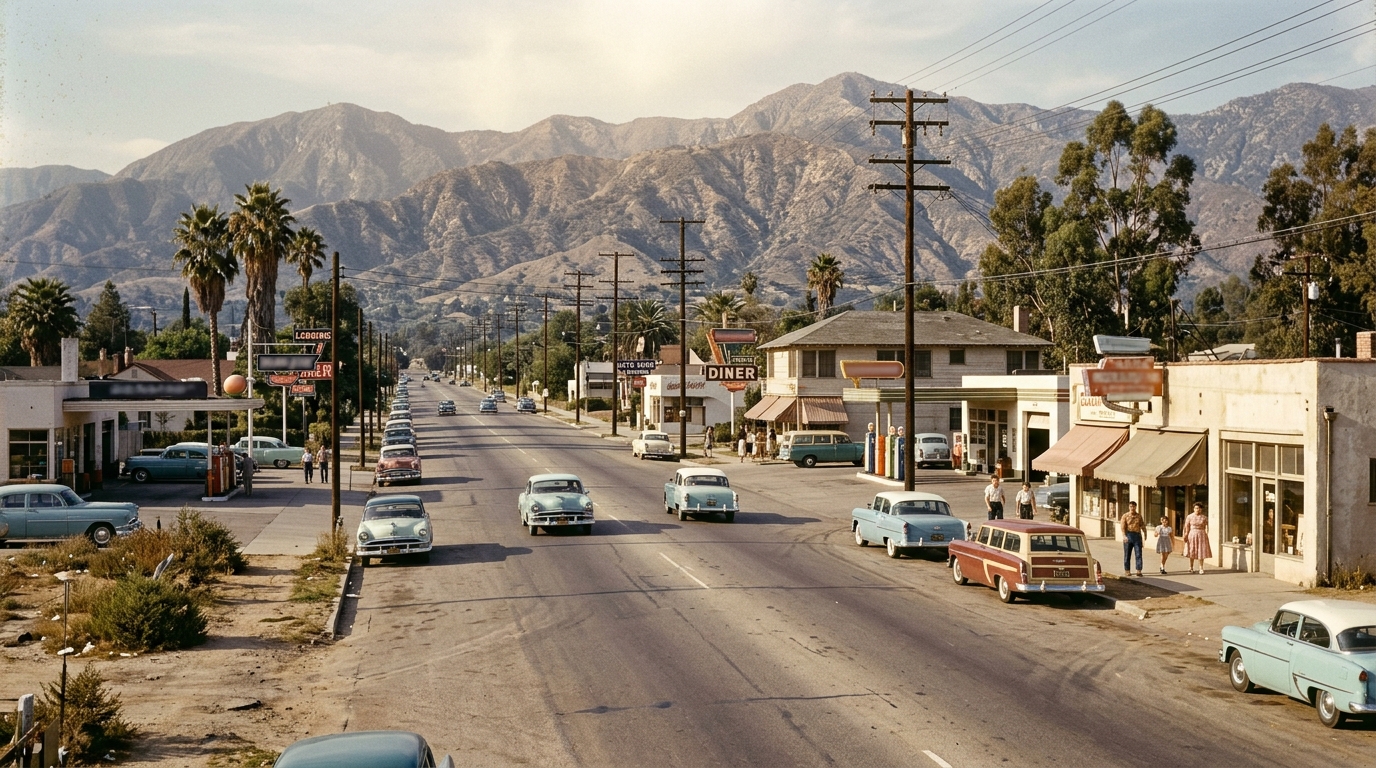
Huntington Drive remains one of Duarte’s most recognizable streets. Its historical connection to Route 66 makes it more than an ordinary transportation corridor. It also provides a physical link between the modern city and an earlier period of American travel.
During the twentieth century, automobile ownership became increasingly common. Families could travel greater distances for shopping, recreation, employment, and vacations. Businesses located along important roads gained opportunities to serve both local customers and travelers passing through the region.
The character of roadside commerce developed around convenience and visibility. Fuel stations, restaurants, garages, and stores became familiar features of American highway landscapes.
Not every business operating along Huntington Drive today dates to the Route 66 era. Nevertheless, the corridor’s historical identity remains important because the street continues to connect different generations of Duarte residents.
Why Route 66 became a symbol of American freedom
Route 66 gained a reputation that extended far beyond its practical function. Travelers associated the highway with adventure, independence, and the opportunity to discover unfamiliar places.
During the Great Depression, many families moved west in search of economic opportunities. Later, expanding automobile ownership and postwar tourism helped make road trips an important part of American culture.
The highway became a subject of books, songs, photographs, television, and advertising. These cultural representations transformed Route 66 into a recognizable symbol of the American road.
However, its history also includes economic hardship, unequal access to services, and the experiences of communities whose stories were sometimes overlooked. Understanding the complete history means recognizing both the romantic image of travel and the complicated realities of life along the route.
Roadside businesses and the changing San Gabriel Valley
As Southern California grew, transportation corridors influenced patterns of commercial development. Businesses sought locations where motorists could easily stop, while surrounding neighborhoods benefited from improved connections to regional destinations.
In Duarte, Huntington Drive became part of this broader transportation landscape. Its connection with Route 66 helps explain why the roadway remains closely associated with the city’s historical character.
Changes in transportation eventually altered the importance of traditional roadside businesses. Interstate highways allowed motorists to travel longer distances without passing through every historic commercial district.
Some businesses adapted to changing conditions, while others disappeared. Historical photographs, directories, advertisements, and personal memories provide important evidence of those transformations.
Preserving these materials helps residents understand how Duarte evolved from its earlier agricultural and residential roots into the community seen today.
How freeways changed the role of historic Route 66
During the second half of the twentieth century, America’s interstate highway system changed long-distance travel. Modern freeways generally offered faster routes with controlled access and fewer intersections.
As drivers increasingly used these new highways, many traditional Route 66 communities experienced changes in traffic patterns. Businesses dependent on passing motorists sometimes lost customers, while regional transportation became more focused on interstate connections.
Route 66 was officially removed from the United States Highway System in 1985. That administrative change did not erase its historical importance or eliminate the surviving roads associated with the famous route.
In places such as Duarte, older roadways continued serving local residents, businesses, and visitors. The highway’s original national transportation role diminished, but its identity remained meaningful.
Historical preservation efforts later encouraged renewed interest in roadside architecture, original alignments, signs, and community stories.
Today, the centennial provides an opportunity to recognize how transportation decisions affected local economic development and neighborhood character.
How Duarte Celebrates and Preserves Route 66 History in 2026
The hundredth anniversary of Route 66 has inspired celebrations throughout the historic highway corridor. Museums, historical societies, cities, and preservation organizations are using the milestone to share stories and encourage public interest.
Duarte participated in the anniversary through community events, museum programming, and local celebrations.
On July 19, 2026, the Duarte Historical Museum hosted a centennial open house featuring a car show, music, refreshments, and opportunities to explore its Route 66 collection.
The celebration highlighted the importance of local museums in connecting national history with the memories of individual communities.
Rather than treating Route 66 only as a tourism attraction, preservation efforts help explain how ordinary streets, businesses, families, and community organizations became part of a larger American story.
The Duarte Historical Museum and community preservation
The Duarte Historical Society was formed in 1952 and works to preserve materials associated with Duarte and the surrounding San Gabriel Valley. Its activities include exhibitions, historical research, educational programs, community presentations, and publications.
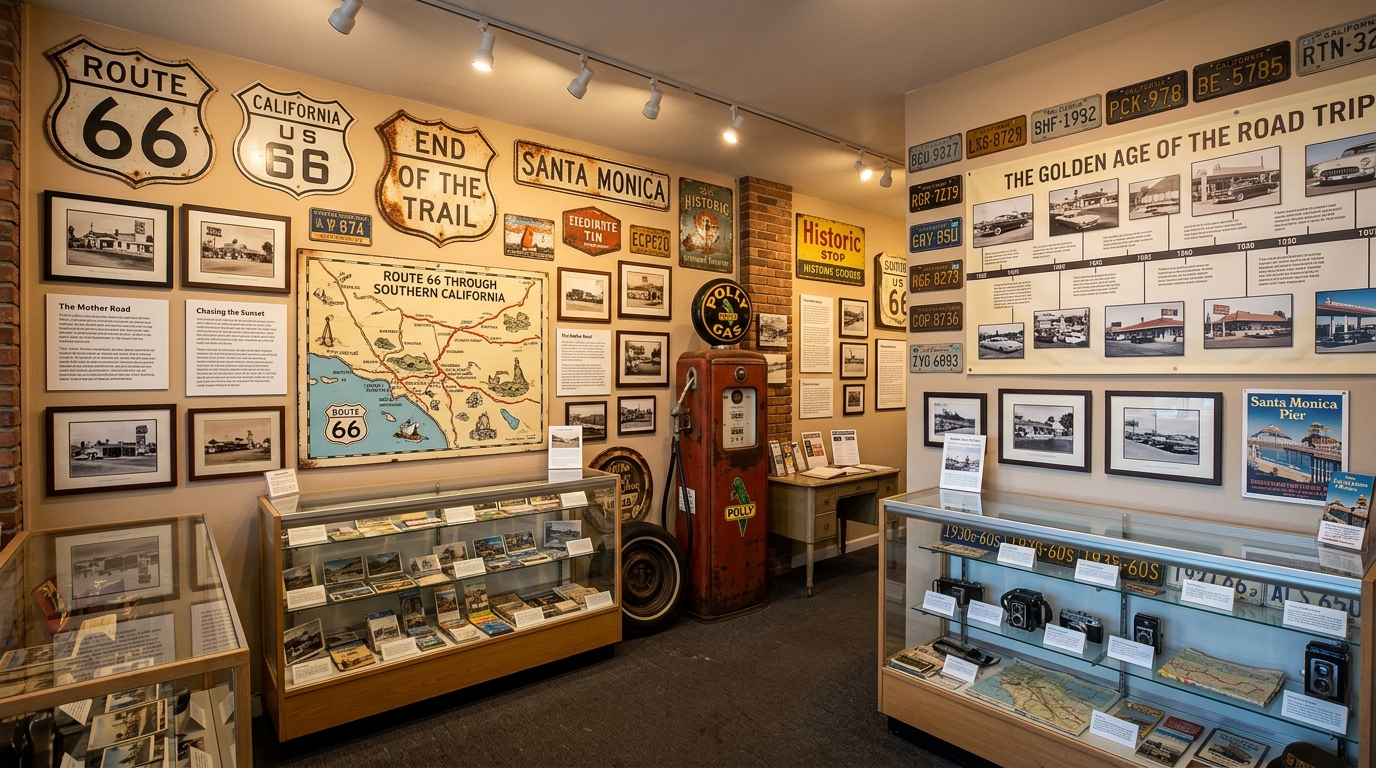
The Duarte Historical Museum is located at 777 Encanto Parkway. Its collections help document local history through objects, photographs, records, and stories associated with earlier generations.
The museum’s Route 66 Room provides a dedicated space for exploring the highway’s influence. The exhibition was formally dedicated in 2024, ahead of the national centennial celebrations.
This preparation demonstrates how historical anniversaries can encourage communities to organize collections and make historical information more accessible.
Why local artifacts and photographs matter
Historic photographs can reveal details that written summaries sometimes overlook. They may show businesses that no longer exist, changes in streetscapes, older automobiles, clothing styles, and community gatherings.
Advertisements, maps, signs, and personal belongings can also help researchers understand how people lived and traveled.
However, responsible historical interpretation requires careful identification. A photograph should ideally include a date, location, photographer, and reliable description whenever that information is available.
Personal memories add valuable perspectives, although they should be compared with records when specific historical claims require confirmation.
By preserving different types of evidence, local institutions make it easier for future generations to study the city’s changing identity.
The importance of the 2026 Route 66 Parade
Duarte’s Route 66 Parade has long been connected to community identity. The event brings together residents, schools, local organizations, performers, and automobile enthusiasts.
The city scheduled its 2026 parade for September 26, with special emphasis on the highway’s centennial. The celebration provided an opportunity to recognize one hundred years of Route 66 while encouraging participation across generations.
Classic automobiles are especially appropriate symbols for this anniversary because they help illustrate changes in transportation and popular culture.
Yet the parade represents more than automobile nostalgia. It also celebrates the families, volunteers, businesses, and civic groups that help preserve Duarte’s community traditions.
Events like this can introduce younger residents to local history in an accessible setting. A student who watches a classic car procession may become interested in learning how the highway shaped the city.
Historical organizations can build on that curiosity through exhibits, oral-history projects, guided tours, and educational materials.
The city also embraced the centennial through public art planning under the theme “Duarte’s Route 66 – Past, Present, & Future.” This theme encourages residents to consider both the highway’s historical influence and its continuing role in community identity.
For visitors interested in learning more about the centennial, the official Route 66 Centennial website provides information about anniversary programs and preservation initiatives across the historic route.
Readers can also explore Duarte History for local historical resources and information about the community’s heritage.
Looking ahead, Route 66 preservation will remain important after 2026. Historic buildings, roadway features, personal collections, and community memories require ongoing attention rather than recognition during a single anniversary year.
Residents can contribute by sharing accurately identified photographs, recording family stories, supporting museums, and learning about the preservation of historic places.
The Route 66 Centennial in 2026 is therefore both a celebration and an opportunity for education. It connects national transportation history with the everyday experiences of people who lived, worked, and traveled through Duarte.
From Huntington Drive to the museum’s Route 66 exhibits, the legacy of the Mother Road remains part of the city’s identity. Remembering that history helps explain Duarte’s past while encouraging the community to preserve its stories for future generations.