Route 66 in Duarte is more than a historic highway marker. For generations, Huntington Drive carried travelers, workers, families, businesses, and new ideas through the community. In 2026, the centennial of Route 66 offers a timely reason to look at how the road helped change Duarte from an agricultural community into a growing suburban city.
U.S. Route 66 was established in 1926 and became one of America’s most famous highways. In Duarte, the road followed Huntington Drive, which had already become an important local corridor after its construction in the 1920s.
The connection remains visible today. Duarte’s Historical Museum has preserved Route 66 memorabilia for years, and its dedicated Route 66 Room highlights the city’s place along the Mother Road. In July 2026, the museum also marked the highway’s 100th anniversary with a community celebration.
Looking back at Route 66 in Duarte reveals more than nostalgia. It shows how transportation can influence commerce, population growth, neighborhood identity, and the way a community presents its history to future generations.
How Route 66 in Duarte Changed Local Life
Before the automobile became dominant, Duarte’s economy centered heavily on agriculture. Citrus orchards, packing houses, rail connections, and nearby farms helped define the local landscape. Railroads moved agricultural products to larger markets, while the Pacific Electric Red Car connected the area with Los Angeles and surrounding communities.
That pattern began to change as automobile travel expanded. Huntington Drive was constructed through Duarte in 1925. One year later, Route 66 was established and passed through the foothill area on its way toward Los Angeles and Santa Monica.
The new highway placed Duarte directly on a national travel corridor. Huntington Drive increasingly served motorists moving across Southern California and beyond.
Huntington Drive Became Duarte’s Main Street
The growth of automobile traffic encouraged a different kind of commercial development. Garages, restaurants, service stations, roadside businesses, motels, produce stands, and other traveler-oriented businesses appeared along Huntington Drive.
These businesses served local residents, but they also depended on people moving through the city. Travelers could stop for fuel, meals, supplies, or a place to stay before continuing their journey.
Over time, Huntington Drive became more than a transportation route. It became one of Duarte’s most visible commercial corridors and linked everyday local life to the larger story of American road travel.
Roadside Businesses Connected Duarte to a National Travel Culture
Route 66 helped create a recognizable roadside culture across the United States. Motor courts, cafes, signs, filling stations, and small attractions competed for the attention of motorists. Duarte participated in that culture while keeping its own local character.
For farmers and merchants, increased traffic created new customers. For residents, the highway improved access to nearby communities. For visitors, Duarte became another stop along a road that linked the Midwest with Southern California.
The automobile also changed commercial design. Businesses needed visible signs, roadside access, and parking. Development increasingly responded to people arriving by car rather than by rail or streetcar.
The Highway Arrived While Duarte Was Still an Agricultural Community
It is easy to picture Route 66 only through neon signs and classic cars, but Duarte’s early highway years existed alongside orchards and agricultural land. Citrus remained important during the 1920s and 1930s even as new businesses appeared along Huntington Drive.
The highway did not replace Duarte’s earlier identity overnight. Instead, it added a new layer to a community that was already changing.
After World War II, residential development accelerated. Agricultural land increasingly gave way to homes, schools, and businesses. Duarte eventually incorporated as a city in 1957.
Route 66 Became Part of Duarte’s Community Identity
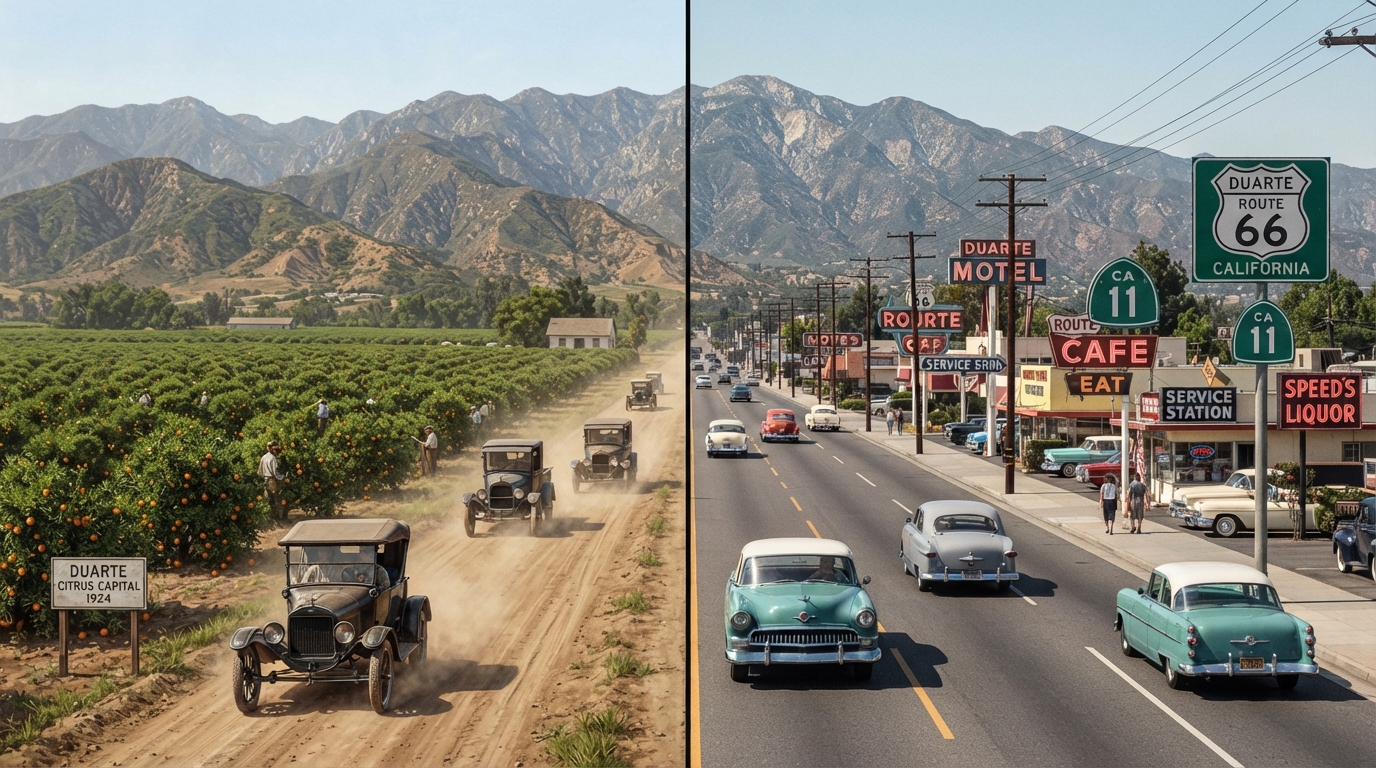
Many highways lose their cultural meaning after newer freeways replace them. Route 66 followed a different path. Even after Interstate highways changed long-distance travel, the Mother Road remained a symbol of migration, family road trips, roadside America, and opportunity.
Duarte continued to recognize that connection. Huntington Drive still carries Route 66 identity through the city, while local programs, museum displays, and community events keep the story visible.
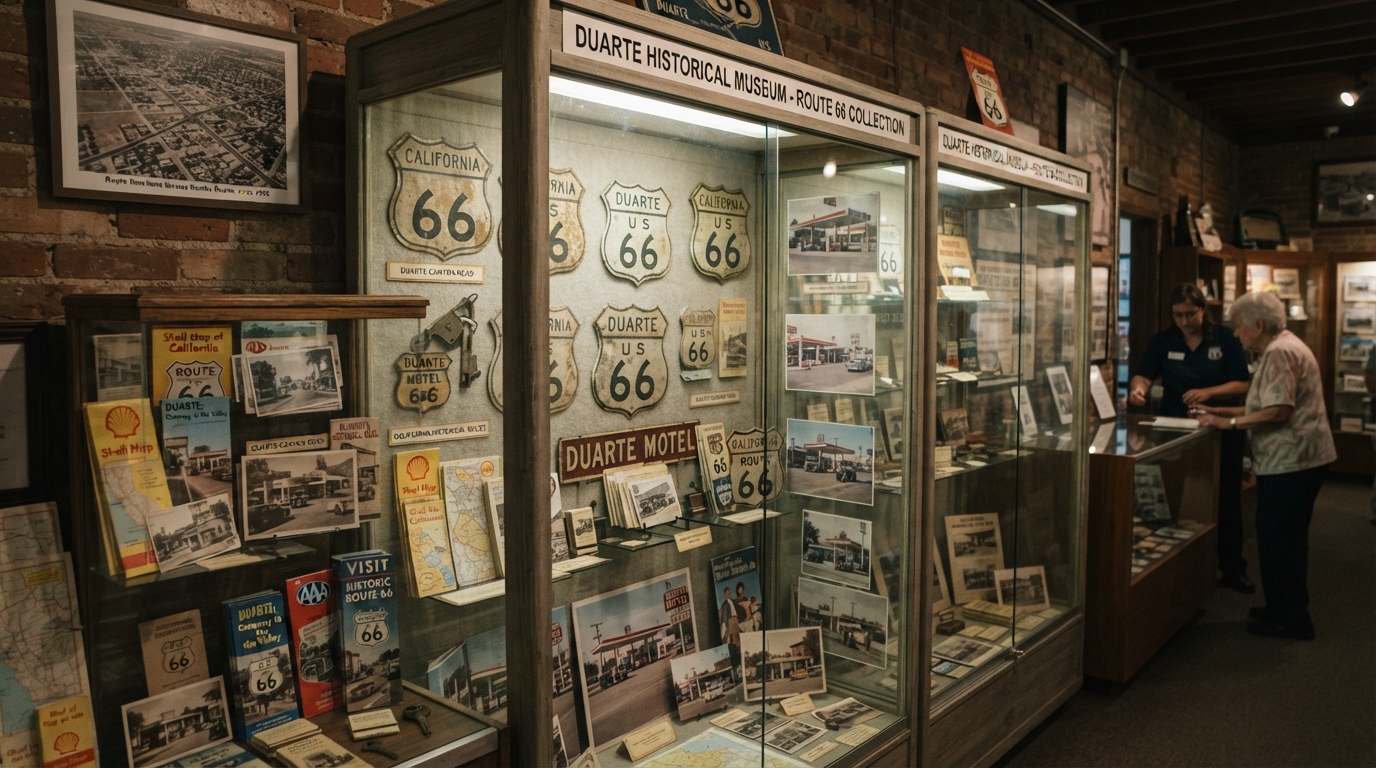
The Duarte Historical Museum’s Route 66 collection includes signs, photographs, memorabilia, and other objects that help visitors connect national history with a specific local place.
The Route 66 Room Preserves Duarte’s Place on the Mother Road
In 2024, the Duarte Historical Museum dedicated the Claudia and Alan Heller Route 66 Room. The exhibit honors two longtime supporters of Route 66 history and gives the highway a dedicated place inside the museum.
The room shows why local museums matter. A national history can describe Route 66 across eight states, but a local collection can show what the road meant to one community. Photographs, maps, signs, advertisements, souvenirs, and personal stories reveal how people in Duarte experienced the highway.
The museum’s work also builds on earlier displays and programs. Over the years, it has featured highway memorabilia, speakers, exhibits, and community celebrations connected with Route 66.
Why the Route 66 Centennial Matters to Duarte in 2026
The year 2026 marks 100 years since U.S. Route 66 was established. The national Route 66 Centennial Commission is coordinating programs that celebrate the road’s history while encouraging preservation, tourism, education, and storytelling across the eight Route 66 states.
For Duarte, the anniversary creates an opportunity to tell a local chapter of that national story. Historic Route 66 runs through the city along Huntington Drive, giving residents a direct connection to one of America’s best-known roads.
The Duarte Historical Museum recognized the centennial with a July 2026 open house that highlighted the highway’s role as Duarte’s historic “Main Street.”
Preserving Route 66 History Means Preserving Everyday Stories
Historic preservation often focuses on famous buildings or major events. Route 66 reminds us that everyday places also carry history. A service station, restaurant, motel sign, family photograph, postcard, or travel brochure can reveal how people lived and moved through a community.
Duarte’s Route 66 story includes business owners who served travelers, residents who watched Huntington Drive change, families who used the road for daily trips, and local historians who saved photographs and artifacts instead of letting them disappear.
Those records matter because the physical landscape keeps changing. Buildings are remodeled or demolished. Businesses close. Signs vanish. Without documentation, future residents may know Route 66 passed through Duarte without understanding what the corridor once looked like.
The Centennial Is a Chance to Connect Younger Generations With Local History
The Route 66 centennial can make local history easier to approach because the highway already has a strong visual identity. Classic cars, shield signs, postcards, maps, roadside architecture, and travel stories can attract people who might not normally visit a local museum.
For students, the road can open discussions about transportation, migration, business, architecture, tourism, and suburban growth. For longtime residents, it can encourage the sharing of family photographs and memories that may not yet exist in a public archive.
That exchange matters. Local history becomes stronger when museums combine official records with the experiences of ordinary people. A photograph of a long-gone Huntington Drive business may answer questions that maps and government records cannot.
The centennial also encourages residents to look at familiar places differently. A modern trip along Huntington Drive may feel routine, but the same corridor once carried travelers who depended on paper maps, roadside signs, motor courts, and service stations.
Anyone interested in the national anniversary can explore the official Route 66 Centennial program, which documents events, preservation efforts, educational projects, and the broader history of the Mother Road.
For Duarte, the most meaningful part of the centennial may be local. Route 66 helped redirect commerce toward Huntington Drive. It brought travelers through the community and influenced the types of businesses that appeared along the corridor. Later, it became part of the city’s historical identity.
That story continues through local historians, museum volunteers, collectors, students, and residents who preserve photographs and memories. Their work ensures that Route 66 in Duarte is not reduced to a highway shield or anniversary slogan.
One hundred years after Route 66 was established, Huntington Drive still gives Duarte a visible connection to the Mother Road. The buildings and businesses may have changed, but the corridor remains part of the city’s story.
The 2026 centennial is both a celebration and an invitation. It asks residents to enjoy the nostalgia while also looking closely at the places, objects, and stories that explain how Duarte became the community it is today.
This article is intended for historical and educational purposes. Readers with photographs, documents, or firsthand stories related to historic Route 66 in Duarte are encouraged to preserve and share them with appropriate local historical collections.